
Introduction to Musculoskeletal Ultrasound
Introduction to Musculoskeletal Ultrasound
This course includes
The instructors
Overview
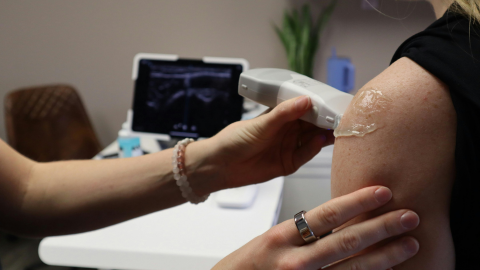
Musculoskeletal ultrasound (MSK US) has rapidly evolved into a powerful diagnostic tool for clinicians managing musculoskeletal conditions. Offering real-time, dynamic imaging of soft tissues, ultrasound allows healthcare professionals to visualize tendons, ligaments, muscles, and joints during movement—providing insights that static imaging methods may miss.
In this course presented at CPA Congress 2021, experts Janine Noble and Mela Strowmer introduce the fundamentals of musculoskeletal ultrasound and its growing role in physiotherapy and musculoskeletal care. Participants will explore the core principles of ultrasound imaging, including probe selection, scanning techniques, and the physics behind accurate image acquisition.
Using the shoulder as a primary example, the presenters guide learners through a standardized scanning protocol covering key anatomical structures such as the biceps tendon, rotator cuff tendons, and the acromioclavicular joint. Participants will also examine examples of normal and pathological ultrasound findings, including tendinosis, tendon tears, calcifications, bursitis, and tendon subluxation.
In addition to technical skills, the course addresses professional scope-of-practice considerations, training requirements, and the expanding role of MSK ultrasound in physiotherapy practice.
By the end of the course, clinicians will gain a clear understanding of how musculoskeletal ultrasound can enhance clinical assessment, diagnostic accuracy, and patient care.
Learning Objectives
By the end of this course, participants will be able to:
-
Describe the principles and advantages of musculoskeletal ultrasound in clinical practice.
-
Differentiate diagnostic ultrasound from therapeutic ultrasound and understand their respective roles.
-
Explain key ultrasound imaging concepts, including probe orientation, anisotropy, and scanning in multiple planes.
-
Identify the key anatomical structures of the shoulder commonly assessed with ultrasound.
-
Recognize common shoulder pathologies on ultrasound imaging, including tendinosis, tendon tears, bursitis, and calcifications.
-
Understand the importance of standardized scanning protocols for reliable imaging and diagnosis.
-
Discuss scope-of-practice considerations and training requirements for clinicians using MSK ultrasound.
Audience
This course is designed for healthcare professionals involved in musculoskeletal assessment and rehabilitation, including:
-
Physiotherapists / Physical Therapists
-
Chiropractors
-
Osteopaths
-
Sports medicine clinicians
-
Rehabilitation specialists
-
Healthcare professionals interested in diagnostic imaging and musculoskeletal ultrasound
Why This Course Matters
Musculoskeletal conditions are among the most common reasons patients seek rehabilitation care. Yet clinicians often rely on clinical examination alone or delayed imaging referrals to guide treatment decisions.
Musculoskeletal ultrasound offers a unique solution by providing:
-
Real-time dynamic imaging during movement
-
Immediate visualization of soft tissue structures
-
Improved diagnostic confidence
-
Greater accessibility and affordability compared to MRI
Advances in ultrasound technology—including portable and handheld devices—are making this imaging modality increasingly accessible to clinicians in private practice and outpatient settings.
However, effective use of ultrasound requires proper training, understanding of imaging physics, and standardized scanning protocols. This course introduces the foundational knowledge clinicians need to begin exploring the integration of MSK ultrasound into musculoskeletal practice.
By understanding both the technical and clinical applications of ultrasound, healthcare professionals can improve diagnostic accuracy, support better treatment decisions, and enhance patient outcomes.
The instructors

Material included in this course
-
Course Materials
-
Introduction to Musculoskeletal Ultrasound
-
Summary and Key Insights
-
Feedback
I'm a member of the Canadian Physiotherapy Association (CPA). What are the discounts available to CPA Members on Embodia?
As part of our partnership with the CPA, we offer its members discounts on courses and Embodia Memberships. Learn more about the partnership on this page.
In order for the discount to be applied, you first need to authenticate your CPA membership. This is an important step as this is how Embodia 'knows' that you are a CPA member.
To authenticate as a CPA member, you need to sign in the CPA portal on this page, sign in to your CPA account, and then click the button on the page.
Please note that your email address on your CPA account must match your email address on Embodia. If needed, you can update your information on Embodia as outlined in this guide.

Is a certificate of completion included with this course?
Once you have completed the course, a certificate of completion (including learning hours and course information) will be generated. You can download this certificate at any time. To learn more about course certificates on Embodia please visit this guide.
This can be used for continuing education credits, depending on your professional college or association. If this course has been approved for CEUs in specific jurisdictions, it will be noted on the course page and CEU information may be added to your course certificate. Please read this guide for more information.